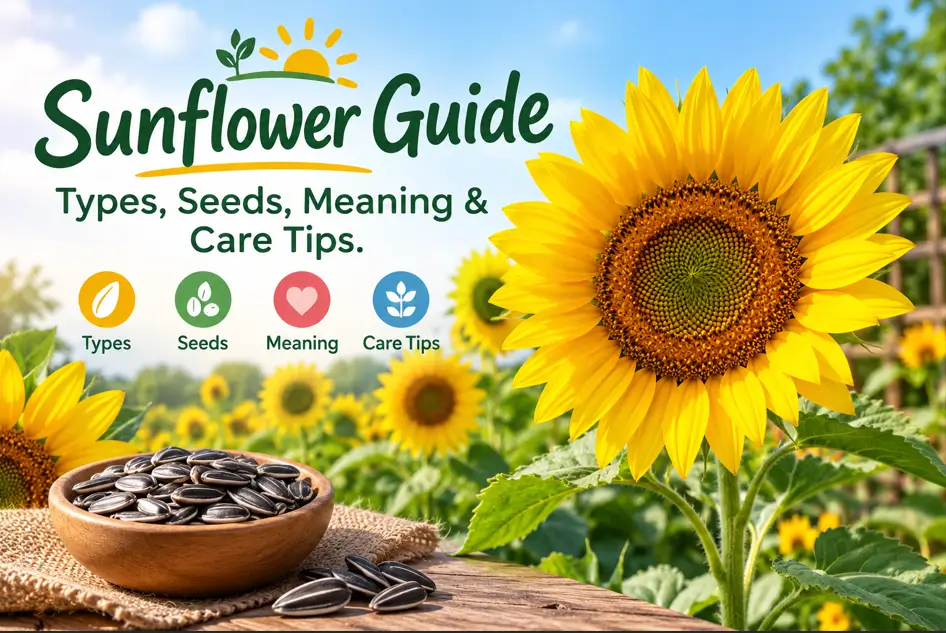
Sunflower History, Types, Seeds, Meaning & Care Tips
If you are looking for a flower that brings an instant smile to your face, the sunflower is a delightful choice. The sunflower is a yellow flower that is about as large as a plate. And it faces the sun. Children, in particular, are very fond of it; bees and birds are drawn towards it. Gardeners like to plant this flower in their gardens every year.
This is not just a beautiful flower; it is also food. Sunflower seeds are eaten with great relish; they are also beneficial for birds. Additionally, sunflower blossoms are also used for decoration. It can be grown very easily from a seed. In this guide, you will learn about the varieties of sunflowers, their meanings, and common mistakes.
Whether you want a tall sunflower plant, a smaller variety for a pot, or beautiful flowers for home decoration, this guide offers simple, easy to follow advice.
What Is a Sunflower?
The sunflower is a fast growing annual plant. Its name is formed from two words in the Greek language, which mean ‘sun’ and ‘flower’. In fact, it originates from North America; the people living there have been growing sunflowers for thousands of years for food, oil, and medicine. After that, this plant became well-known in Europe and other parts of the world as well.
You might be surprised to learn that what appears to be a single large sunflower is actually composed of hundreds or thousands of smaller flowers. It has sharp, yellow petals along its edges, while in the center there are small flowers that can develop into seeds. In other words, many seeds can be obtained from a single sunflower.
Quick Sunflower Facts
1- Plant type: Annual (most garden types), with some perennial wild species
2- Height: From 30 cm (1 ft) dwarf types to over 3.5 m (12 ft) giants
3- Bloom time: Mid summer to early autumn, depending on sowing date
4- Sun needs: Full sun, at least 6 to 8 hours daily
5- Time from seed to flower: Usually 70 to 100 days
6- Soil: Well-drained, fertile, slightly acidic to neutral
7- Good for: Cut flowers, edible seeds, bird feeding, pollinator gardens, screening
Do Sunflowers Really Follow the Sun?
A young sunflower turns to face the sun during the day; this process is called heliotropism. When a sunflower fully opens, it stops moving. It faces east, which is why it heats up early in the morning. Due to which honeybees are more attracted to it.
Types of Sunflowers and Popular Varieties
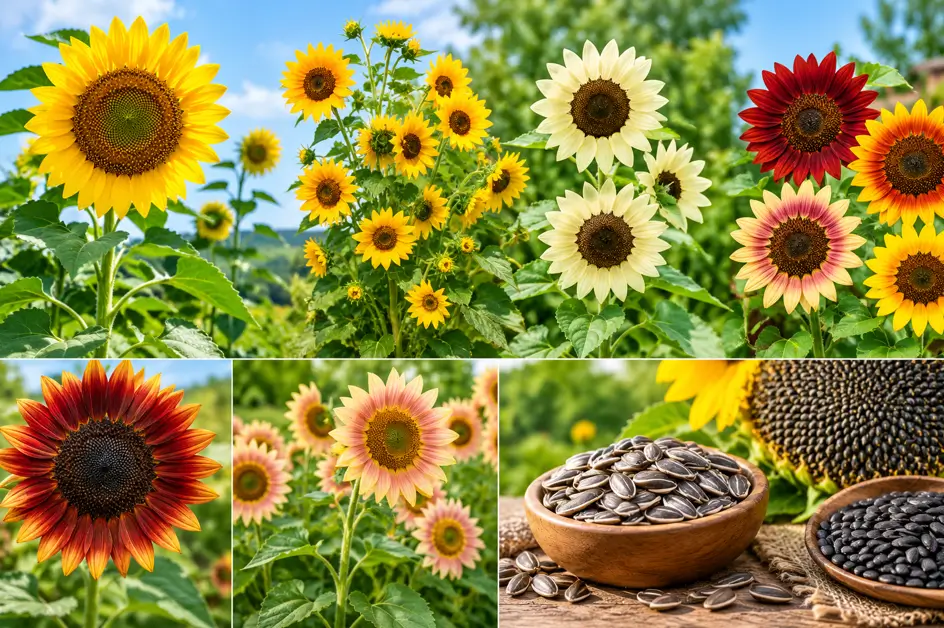
If you want to make this beautiful flower a highlight of your home, it is essential to select the right variety. If you do not choose a variety suitable for your location, you may end up disappointed. Therefore, these factors should be considered when selecting the type.
Giant Sunflowers
Sunflower plants grow to a great height. They can be three to four meters, or even larger. Mammoth Grey Stripe and American Giant are very popular varieties. Along with good soil and fertilizer, they also require support to protect them from the wind. These large plants are an excellent choice for obtaining seeds and enhancing the beauty of the garden.
Branching Sunflowers
Varieties of branching sunflowers include ‘Autumn Beauty’ and ‘Italian White’. A special feature of the branching sunflower is that many small flowers continue to bloom on it for several weeks. These are an excellent choice for bouquets, because even if you keep picking the flowers, the plant will not run out of them.
Pollen-Free Sunflowers
If you want to grow this beautiful flower at home, but you don’t like its yellow dust. So, Procut and Sunrich are an excellent choice. Because they do not contain pollen. They keep the flower arrangements tidy, but fewer honeybees visit them. If you grow these sunflowers, it is a good idea to also plant some common sunflowers.
Colorful Sunflowers
Sunflowers are not limited to the color yellow; ‘Moulin Rouge’ varieties are deep red, ‘Italian White’ are creamy colored, ‘Ring of Fire’ are orange and red, while ‘Strawberry Blonde’ produces pink and pale yellow flowers. These beautiful flowers further enhance the charm of the garden. Plant the deep red flowers in a spot with excellent light so that their colors stand out even more.
Oilseed and Confection Sunflowers
There are two other types of sunflowers: oil-seed varieties and edible seed varieties. Oil-bearing seeds are somewhat small and black; oil is extracted from these seeds. The edible seeds are large and striped. They are very delicious to eat; if you also want to consume these seeds, then grow the large, striped variety.
When to Plant Sunflowers
The warm color of sunflowers itself suggests that they thrive well in warm soil and warm weather. Sow the seeds once winter has ended and the soil has warmed up to between 15 and 18 degrees Celsius. It is advisable to sow a small number of seeds every two to three weeks. By doing this, you will continue to get new flowers for several weeks.
In hot regions, seeds can be sown early in the year or towards the end of summer, while avoiding periods of intense heat. In cold regions, sow seeds in pots indoors about three to four weeks before the final frost, and then carefully transplant them into the ground; exposing sunflower roots to the air can weaken the plant.
How to Grow Sunflowers Step by Step
Choose the Right Spot
As the name ‘sunflower’ itself suggests, it requires sunlight. Plant the sunflower in a spot where it will receive six to eight hours of direct sunlight. Large sunflower plants require strong support to protect them from strong winds. Plant large sunflower plants in a place where their shadow will not fall on smaller plants.
Sow the Seeds
Plant sunflower seeds at a depth of one inch. Maintain a spacing of 15 to 20 cm between small plants, and up to 30 cm between medium-sized varieties. Maintain a distance of 45 to 60 centimeters between tall plants. Water sparingly after sowing the seeds; generally, the seeds germinate within seven to ten days.
Prepare the Soil
Sunflowers do not require much care, but they can grow exceptionally well in good soil. Loosen the soil thoroughly to a depth of 30 to 45 centimeters so that the roots can grow rapidly. If organic fertilizer is added to this soil, the sunflower will grow even better.
Do not plant sunflowers in soil that is too wet. If the soil holds too much water, mix in some coarse sand or organic matter to improve drainage. Avoid allowing water to accumulate around the roots, as this can lead to root rot. Just like sunflowers, roses also need proper watering and well drained soil to stay healthy. For more helpful advice, check out these rose care tips in summer to learn how to keep your plants healthy during hot weather.
Sunflower Care Tips for Strong, Healthy Plants
Watering
Water the sunflower plant with an appropriate amount of water daily; this will cause the plant’s roots to grow deep into the ground. This gives the plant the strength to withstand strong winds and dry weather.
Young sunflower plants require regular watering. Always water near the roots rather than pouring water onto the flowers. Applying water to the leaves can increase the risk of fungal growth. If your sunflower begins to wilt, it may need water especially if it is planted in a pot. Soil in a pot dries out faster than soil in the ground, so it should be watered regularly.
Feeding
Sunflower plants do not require a large amount of fertilizer; mix fertilizer into the soil before planting. When the flower buds begin to form, apply an appropriate amount of fertilizer every two to three weeks. Applying too much fertilizer results in fewer flowers, and the stems also begin to weaken. Therefore, always apply fertilizer in the appropriate amount.
Staking and Support
Tall sunflower plants require support. When the plant reaches a height of one and a half feet, tie it loosely to a wooden stake. If a stem bends due to strong wind, tie it up immediately to prevent the plant from breaking.
Deadheading and Cutting
Remove the withered sunflower blossoms so that the plants continue to bloom for a longer period. If you want to keep these beautiful flowers in a vase in your home for decoration, cut them in the morning. Cut the long stems, remove the lower leaves, and place the flowers in clean water immediately so that they remain fresh.
Common Sunflower Problems and How to Fix Them
Drooping heads or leaves. Usually thirst, but heavy heads on thin stems can also bend. Water deeply and stake if needed.
Yellowing leaves. Often overwatering or poor drainage. Check the soil. If it feels soggy, hold back on watering and improve drainage.
White powdery coating (powdery mildew). Common in humid weather and crowded plantings. Give plants more space, water at the base, and remove badly affected leaves.
Holes in leaves. Caterpillars, beetles or snails. Hand-pick where you can, and encourage birds and beneficial insects instead of reaching for strong sprays.
Aphids. Small green or black insects on stems and buds. A strong jet of water usually knocks them off, and ladybirds will help finish the job.
Seedlings vanishing overnight. Almost always slugs, snails, birds or rodents. Protection in the first two weeks is the cure.
Small, poor heads. Too little sun, overcrowding, or too much nitrogen. Next time, space plants properly and choose a sunnier spot.
Sunflower Seeds: How to Harvest, Dry and Eat Them
Growing sunflower flowers is not a difficult task. If you want to have a delightful gardening experience, sunflowers are an excellent choice.
When Are Sunflower Seeds Ready?
Keep an eye on the back of the sunflower once its petals have fallen off. When its back part is first green, then spreads and finally turns brown, understand that the seeds are among those that ripen. The flower will bend due to the weight of the seeds.
How to Harvest
1- Cover the head with a paper bag or a piece of muslin to catch falling seeds and discourage birds.
2- Cut the head off with about 30 cm of stem.
3- Hang it upside down in a dry, airy, shaded place for one to two weeks.
4- Rub the seeds out with your hands or a stiff brush.
5- Spread the seeds in a single layer and let them dry completely before storing.
How to Roast Sunflower Seeds
If you want to eat their delicious brains, soak them in salted water overnight. If you want to eat their delicious brains, soak them in salted water overnight. Sauté them for 30 to 40 minutes, stirring occasionally to ensure they cook thoroughly. To store the roasted seeds for a longer period, you can also keep them in a jar.
Sunflower Symbolism and Meaning
Many meanings are associated with the various colors of sunflowers; most of these meanings are linked to the sun.
1- Happiness and positivity: The bright golden color and sun like shape make sunflowers a symbol of joy and optimism.
2- Loyalty and devotion: Because the young flower follows the sun, it is often seen as a sign of faithfulness and steadfast love.
3- Adoration: In Greek myth, the nymph Clytie was said to turn into a flower that forever follows the sun god, and this story is often linked to the sunflower, even though the flower in the original tale is debated.
4- Strength and longevity: A tall stem and a sturdy seed head represent resilience.
5- Peace and hope: Sunflowers have become an international symbol of peace and hope, and they are especially associated with Ukraine, whose national flower is the sunflower.
6- Abundance: The thousands of seeds in one head stand for prosperity and fertility.
Sunflower Meaning in Gifts
The sunflower expresses joy and love. It makes every occasion even more delightful. Its beautiful colors double the joy. This is an excellent choice for thanking someone. Even a single sunflower conveys the same beautiful message as a large bouquet.
Sunflower Color Meanings
1- Yellow: Joy, friendship, warmth
2- Orange: Energy, enthusiasm, creativity
3- Red or burgundy: Passion, strength, deep admiration
4- White or cream: Calm, gentle affection, purity
Frequently Asked Questions About Sunflowers
How long does it take for a sunflower to grow?
Large sunflower plants typically bloom after 70 to 100 days. It can often take even more than a hundred days. Whereas smaller plants bloom after 50 to 60 days.
Why are my sunflower leaves turning yellow?
Overwatering is also a major reason why leaves turn yellow. Check the soil moisture and do not let excess water accumulate in it.
Do sunflowers need a lot of water?
A new plant requires regular watering. Whereas plants that have taken root can withstand dry weather.
Can I plant sunflower seeds from the grocery store?
Raw seeds, still in their shells and unroasted, can sometimes sprout. It is best to purchase seeds from a seed seller so that you can obtain beautiful flowers.
Final Thoughts: Why Every Garden Deserves a Sunflower
Sunflower blossoms make the garden even more delightful with their beauty. These flowers can be easily grown from a single seed, so you too can try your hand at growing them. Surely, you too must have become aware of the beauty of this flower. You can give this flower to someone as a gift, or keep it in your home for decoration.If you want to surprise someone with a beautiful floral gift, you can explore fresh flower arrangements and bouquets at The Flower Hype, an online flower store.