
Rose Care Tips in Summer 10 Ways to Keep Your Roses Healthy
Summer can be a beautiful time for roses, but it can also be one of the most challenging seasons for a rose plant. Now in this article we will read rose care tips in summer.
When the temperature rises, the soil can dry out quickly, flowers may fade sooner, and problems such as aphids, black spot, and other diseases can become easier to notice. The good news is that roses don’t need complicated care. A few simple habits can make a big difference.
The most important things to watch during summer are water, soil moisture, sunlight, air circulation, feeding, and regular inspection.
If your roses are looking tired in hot weather, don’t immediately assume that something is seriously wrong. Start by checking the soil, leaves, and new growth. Often, the plant is simply asking for better summer care. Here are the rose care tips in summer I would focus on first.
1 – Water Your Roses Deeply
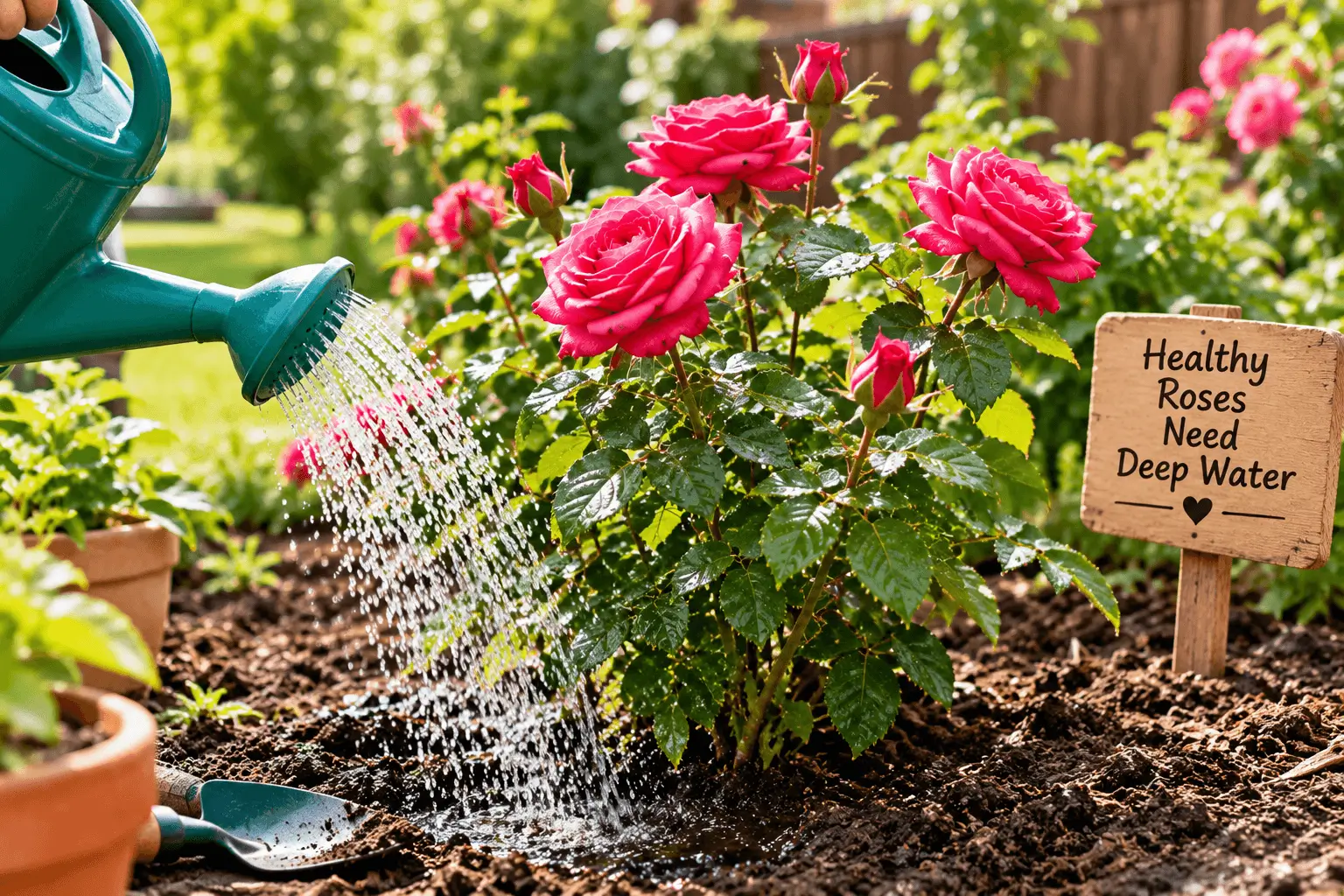
Watering is probably the first thing to check when summer temperatures start rising. One mistake gardeners sometimes make is giving roses a small amount of water every day. This may wet the surface of the soil without providing enough moisture deeper around the roots.
For established roses, a thorough watering during dry weather is generally more useful than frequent, light watering. The RHS recommends deep watering during dry summer periods and notes that established roses may need additional water during hot, dry spells. When watering your rose:
- Water slowly around the base of the plant.
- Allow the water to soak into the soil.
- Check the soil before watering again.
- Give newly planted roses more attention because their roots are not fully established.
- Don’t keep the soil permanently soggy.
I also prefer watering the soil rather than constantly spraying the leaves. Wet foliage can create conditions that encourage some fungal diseases.
How often should roses be watered in summer?
There isn’t one watering schedule that works for every garden. Soil type, temperature, rainfall, plant age and whether the rose is growing in a container all matter. During a very hot and dry period, check the soil regularly instead of following the calendar blindly.
2 – Keep an Eye on the Soil
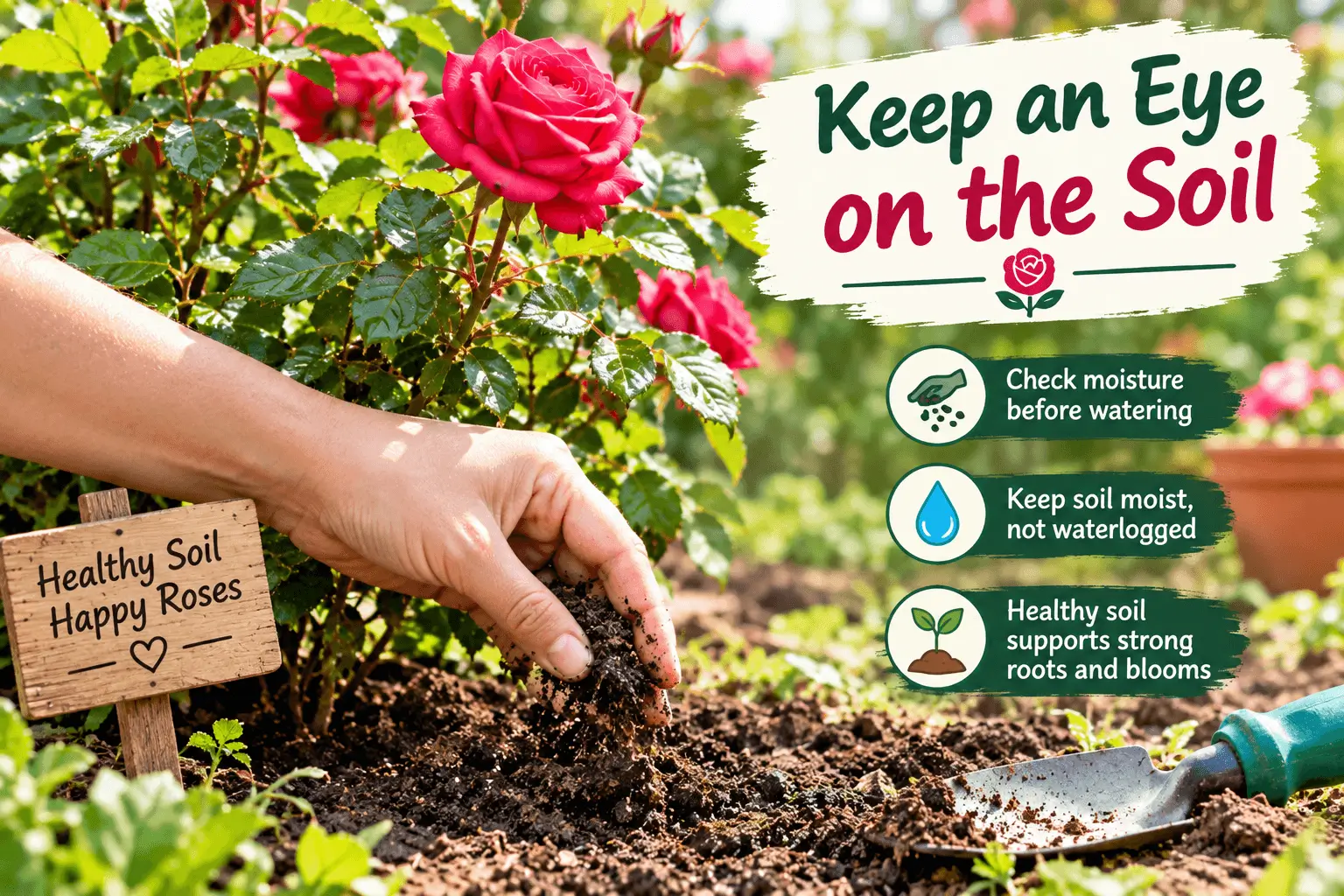
Before reaching for the watering can, take a quick look at the soil. Put your finger into the soil near the rose. If the upper layer is dry and the plant is beginning to wilt, it may be time to water.
At the same time, don’t assume that more water is always better. Rose roots need both moisture and air. Soil that remains waterlogged for long periods can cause root problems. So the goal is simple:
Moist soil, not permanently wet soil.
This small difference can make a big difference to the health of a rose plant.
3 – Use Mulch to Help the Soil Hold Moisture
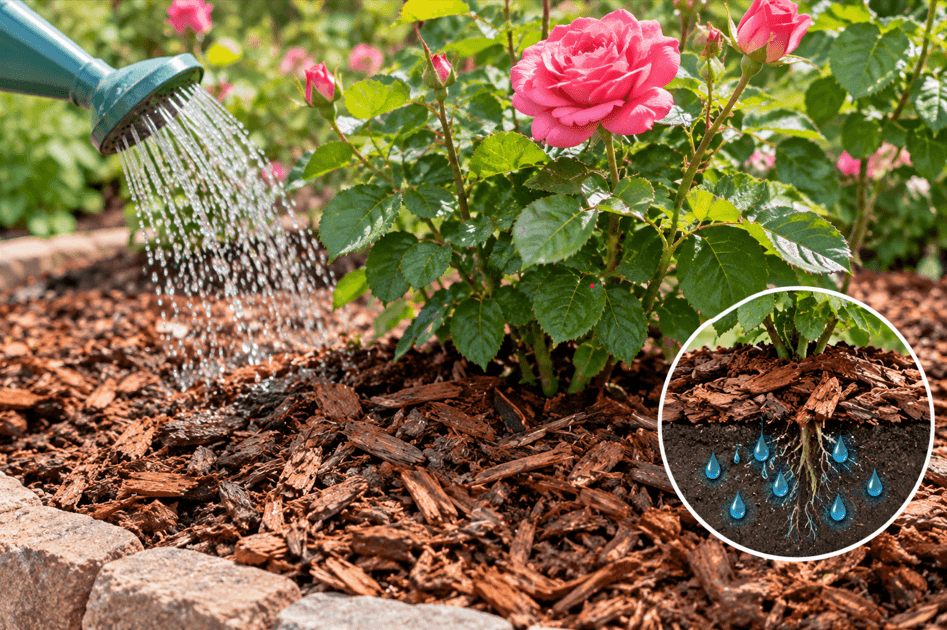
Mulching is one of the easiest summer jobs you can do for roses. A layer of suitable organic mulch can help reduce moisture loss from the soil and moderate soil temperature. It can also help suppress weeds. You can use materials such as:
- Well-rotted garden compost
- Well-rotted manure
- Suitable bark mulch
- Other appropriate organic mulch
Don’t pile mulch directly against the rose stems. Leaving a small gap around the base helps avoid creating unnecessarily damp conditions around the stem. The RHS similarly recommends keeping mulch clear of rose stems. Think of mulch as a protective blanket for the soil rather than something that should cover the entire plant base.
4 – Give Roses Enough Sunlight
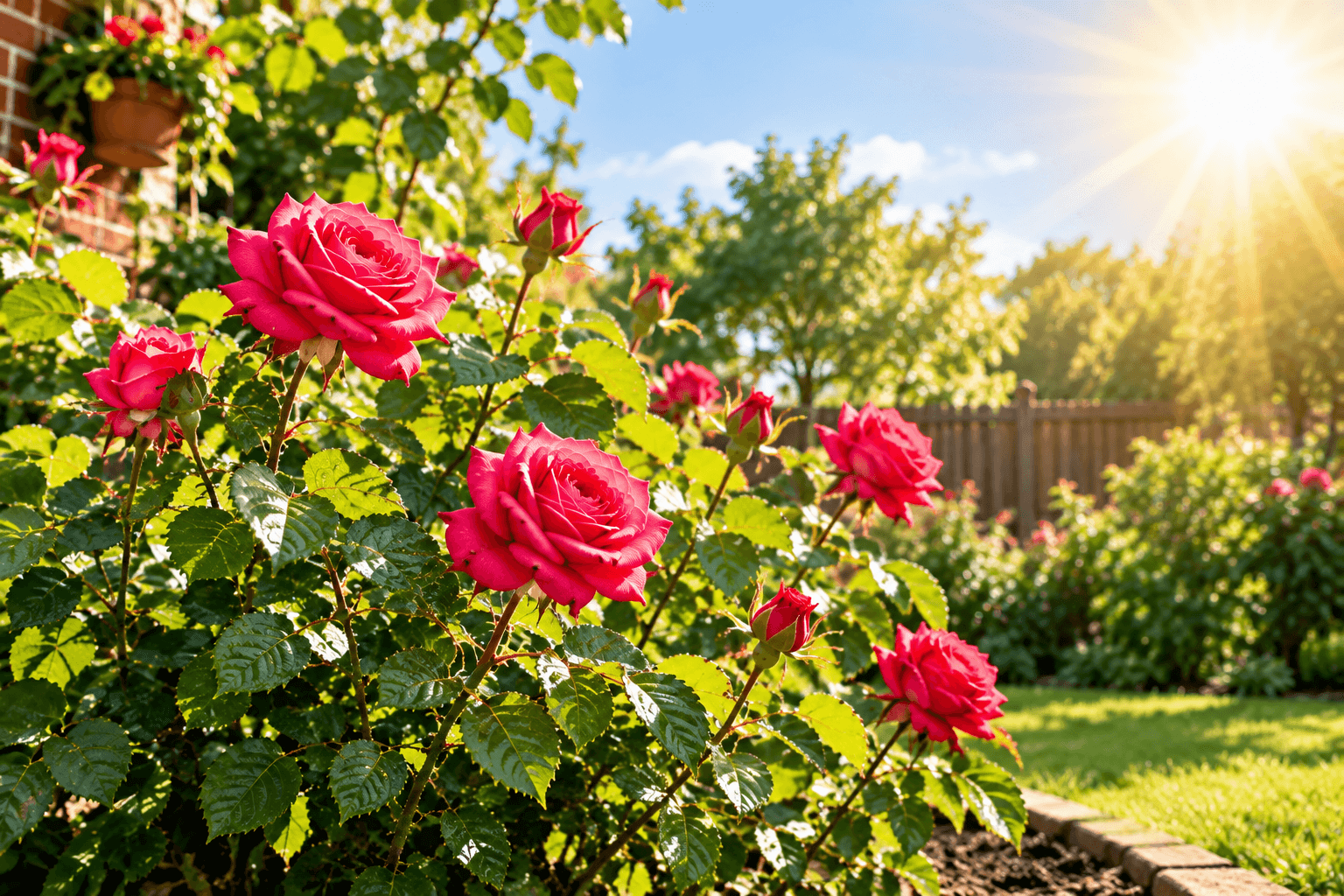
Roses generally perform best in a sunny position. If your rose gets good sunlight but is suddenly producing weak growth or fewer flowers, look around the plant. Has a tree grown enough to shade it? Has another plant become too large?
The RHS recommends a sunny position for roses, with many roses benefiting from several hours of sunlight each day. However, very intense heat can be different from ordinary summer sunlight, particularly in extremely hot climates.
If you live somewhere with exceptionally hot summers, pay attention to how your particular rose responds rather than assuming that more and more direct heat is always better.
5 – Don’t Forget to Deadhead
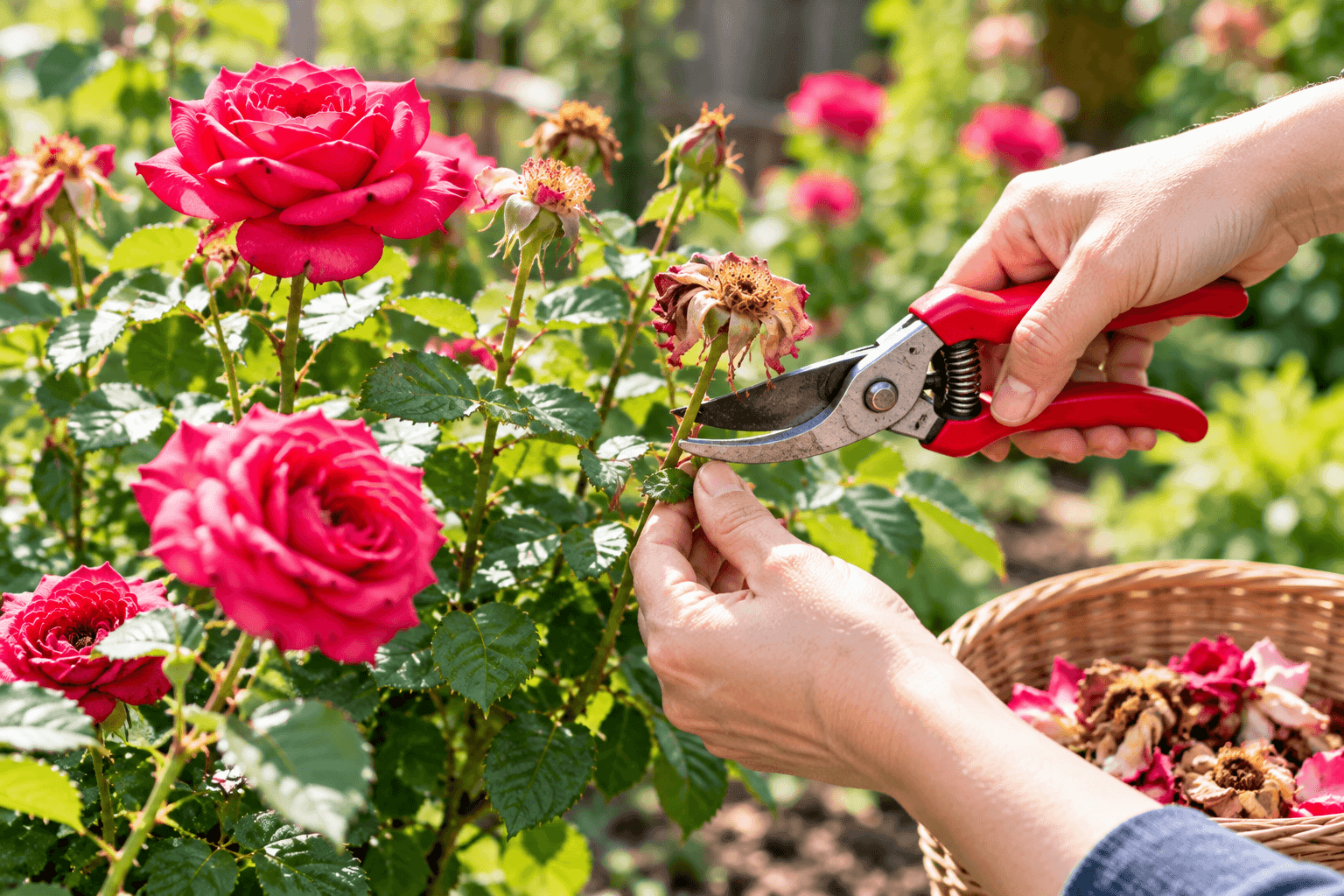
Once a rose flower has faded, it doesn’t have to remain on the plant. Removing spent flowers, known as deadheading, can encourage many repeat-flowering roses to produce more blooms. The basic idea is simple:
- Find a faded flower.
- Follow its stem down.
- Make a clean cut above a suitable leaf/bud.
- Remove the faded flower.
You don’t need to spend hours doing this. A quick inspection once or twice a week can be enough to keep up with fading flowers during an active flowering period.
There is one exception: if you specifically want rose hips on a variety that produces attractive hips, you may choose not to deadhead some flowers later in the season.
6 – Be Careful With Summer Pruning
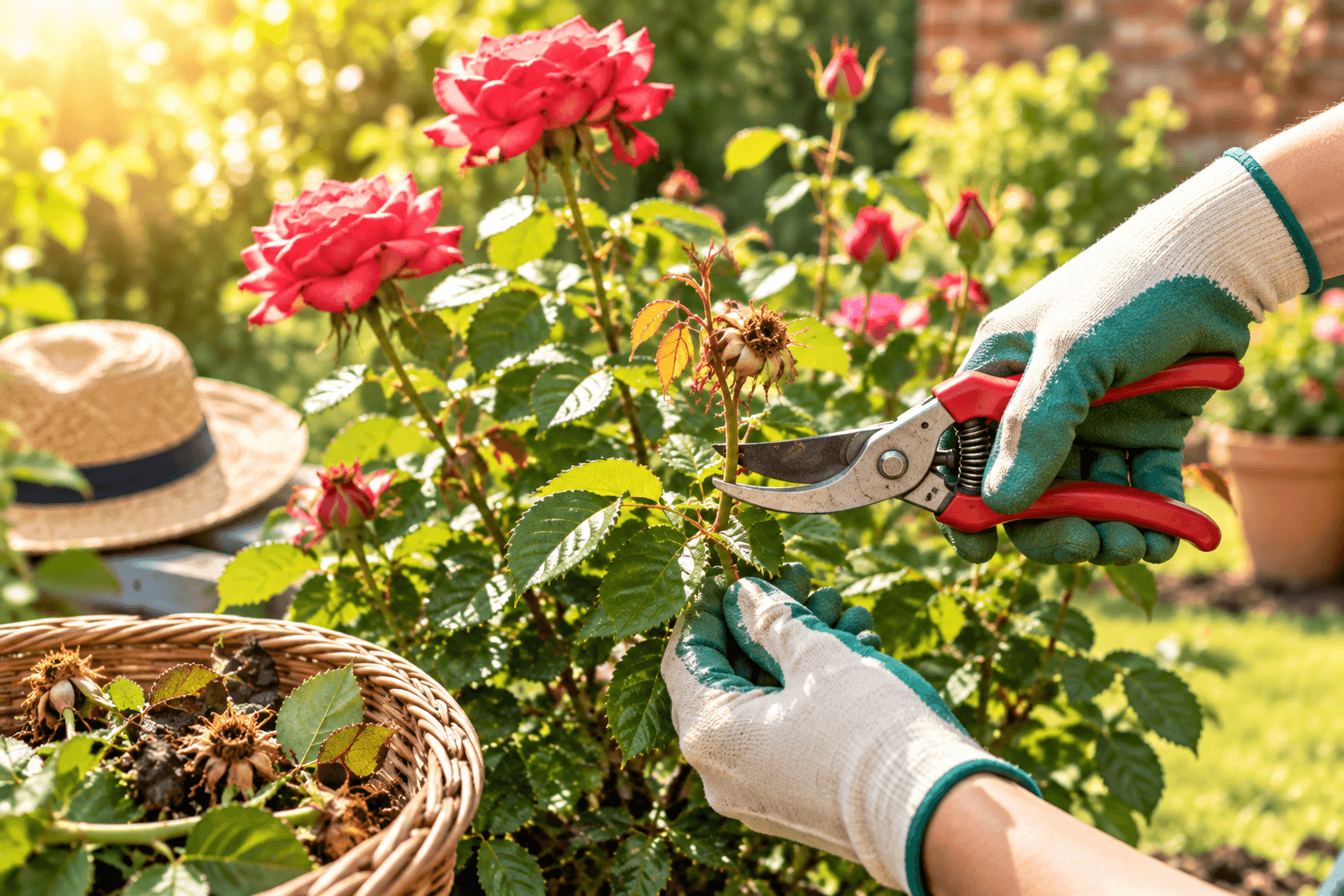
Pruning is useful, but summer is not necessarily the time for major pruning of every type of rose. Different roses have different pruning requirements, so don’t treat a Hybrid Tea, climbing rose, shrub rose and miniature rose exactly the same. During summer, the safer approach is often to remove:
- Dead growth
- Diseased growth
- Damaged stems
- Clearly unwanted growth
Opening up crowded growth can also improve air circulation, which may help reduce conditions favorable to fungal diseases. For major structural pruning, check the requirements of your particular rose variety.
7 – Feed Roses Carefully
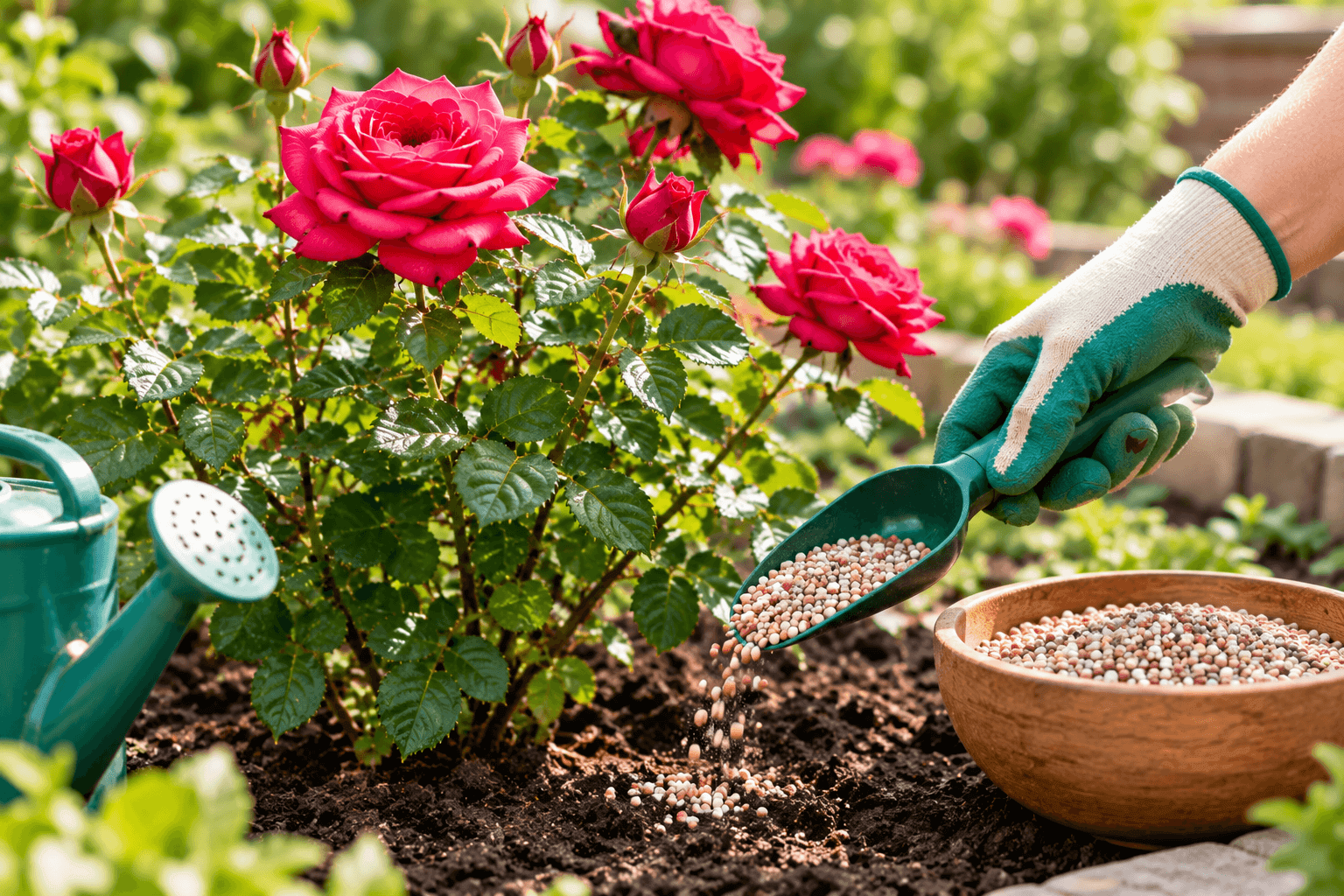
Roses are hungry plants, but more fertilizer does not automatically mean more flowers. Established roses can benefit from feeding as part of their normal growing-season care. The RHS recommends feeding roses at appropriate times during the growing season, including mid-summer for many repeat-flowering roses.
If your rose is growing well and flowering normally, don’t keep adding fertilizer simply because summer has arrived.
And during periods of extreme heat, be cautious about pushing the plant with fertilizer when it is already under environmental stress. Always follow the instructions on the fertilizer product you are using.
8 – Check the Leaves Every Few Days
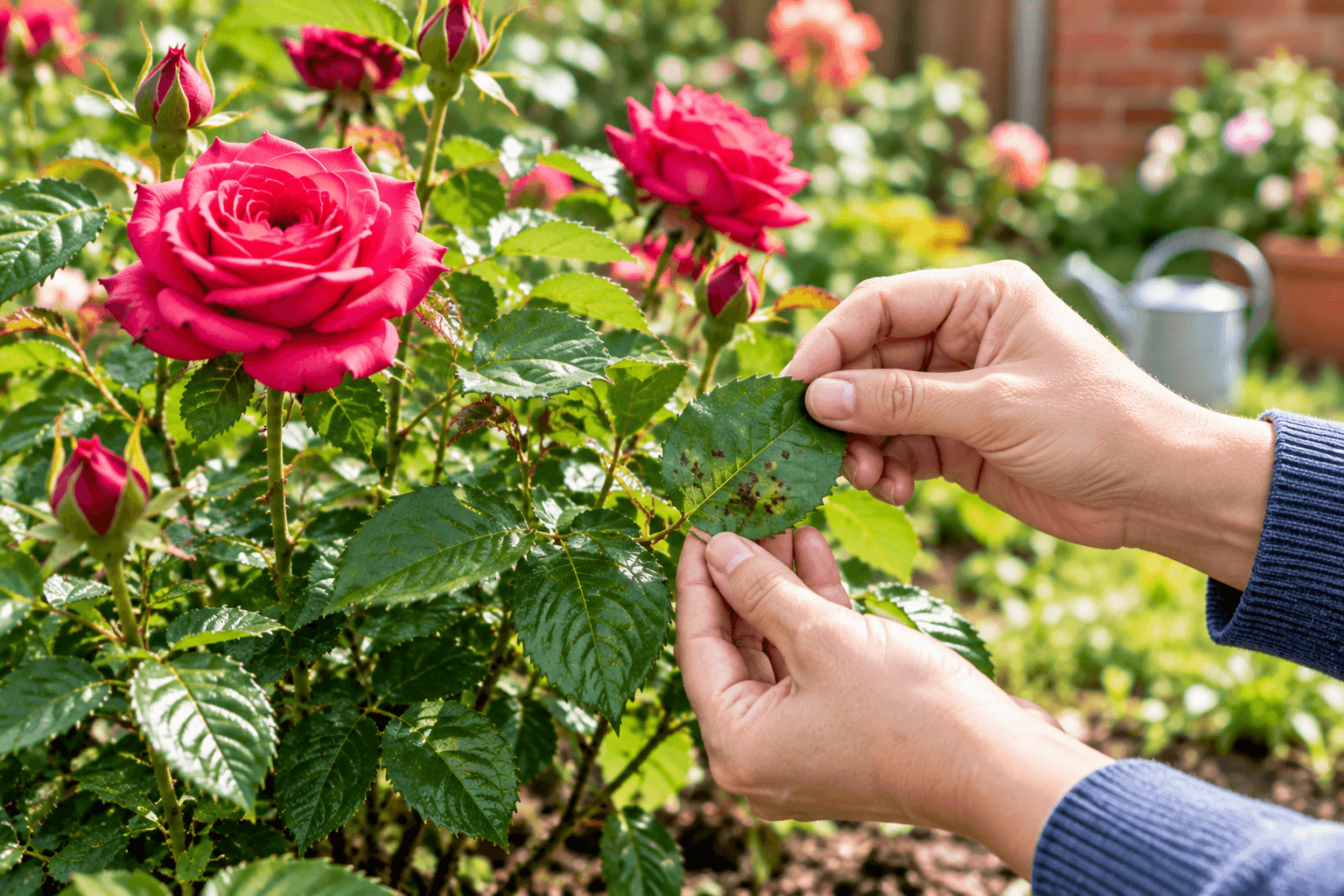
This is one of those small habits that can save a lot of trouble later. Whenever you’re watering your roses, take 30 seconds to look at the leaves. Look for:
- Yellowing leaves
- Black spots
- White powdery growth
- Holes in leaves
- Sticky leaves
- Curling leaves
- Webbing
- Unusual discoloration
Common rose problems include aphids, black spot, powdery mildew, rust and various sawfly pests. The earlier you notice a problem, the easier it is to investigate what is actually happening.
9 – Watch for Aphids and Other Pests
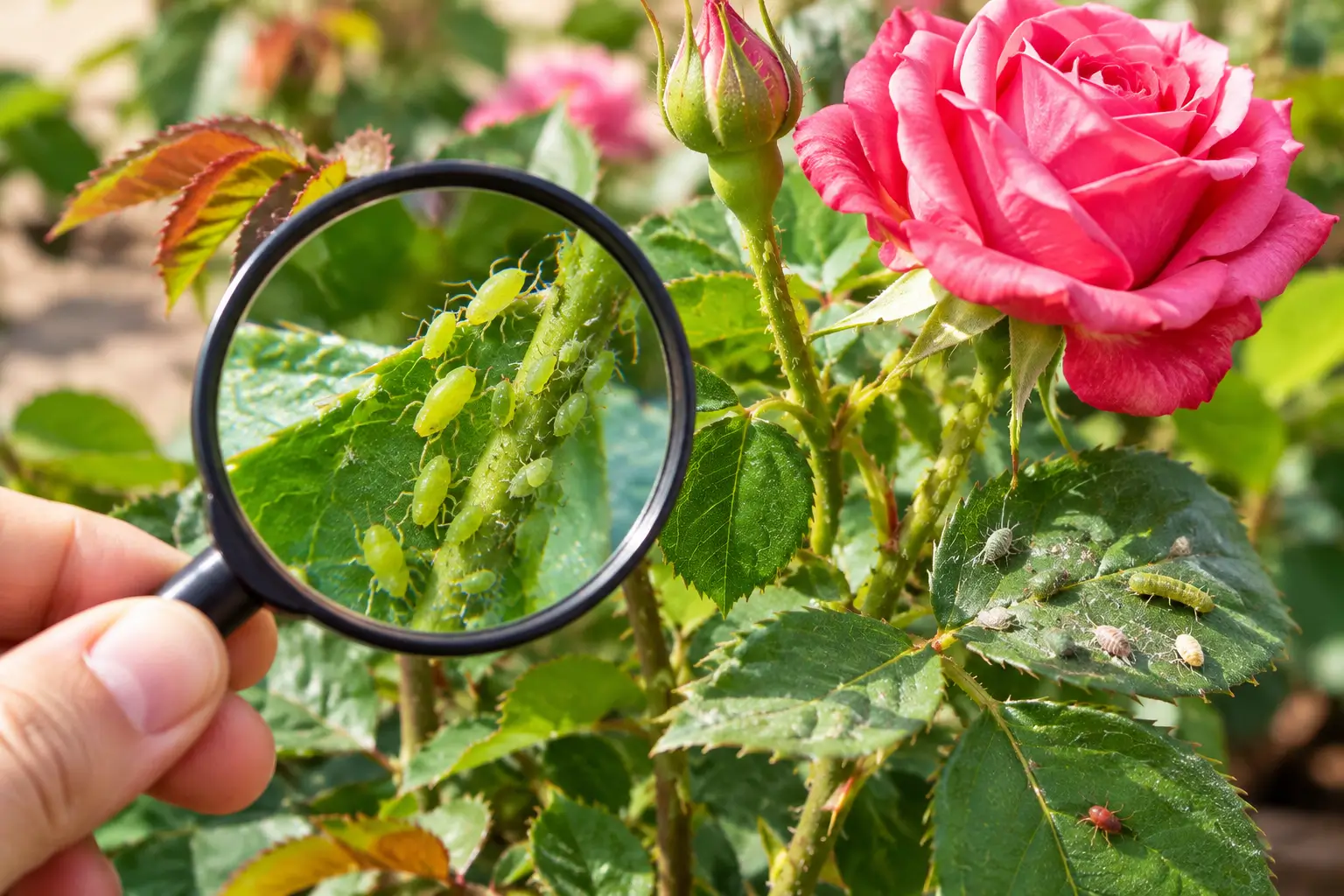
Aphids are one of the pests gardeners commonly notice on roses. They often gather around young shoots, flower buds and new growth.
If you notice a few insects, don’t immediately reach for the strongest chemical treatment you can find. First identify the pest and assess how serious the problem actually is. Some summer rose pests include.
- Aphids
- Spider mites
- Thrips
- Sawfly larvae
- Scale insects
Regularly checking the plant gives you a chance to spot these problems before they become severe.
10 – Give Extra Attention to Roses in Containers
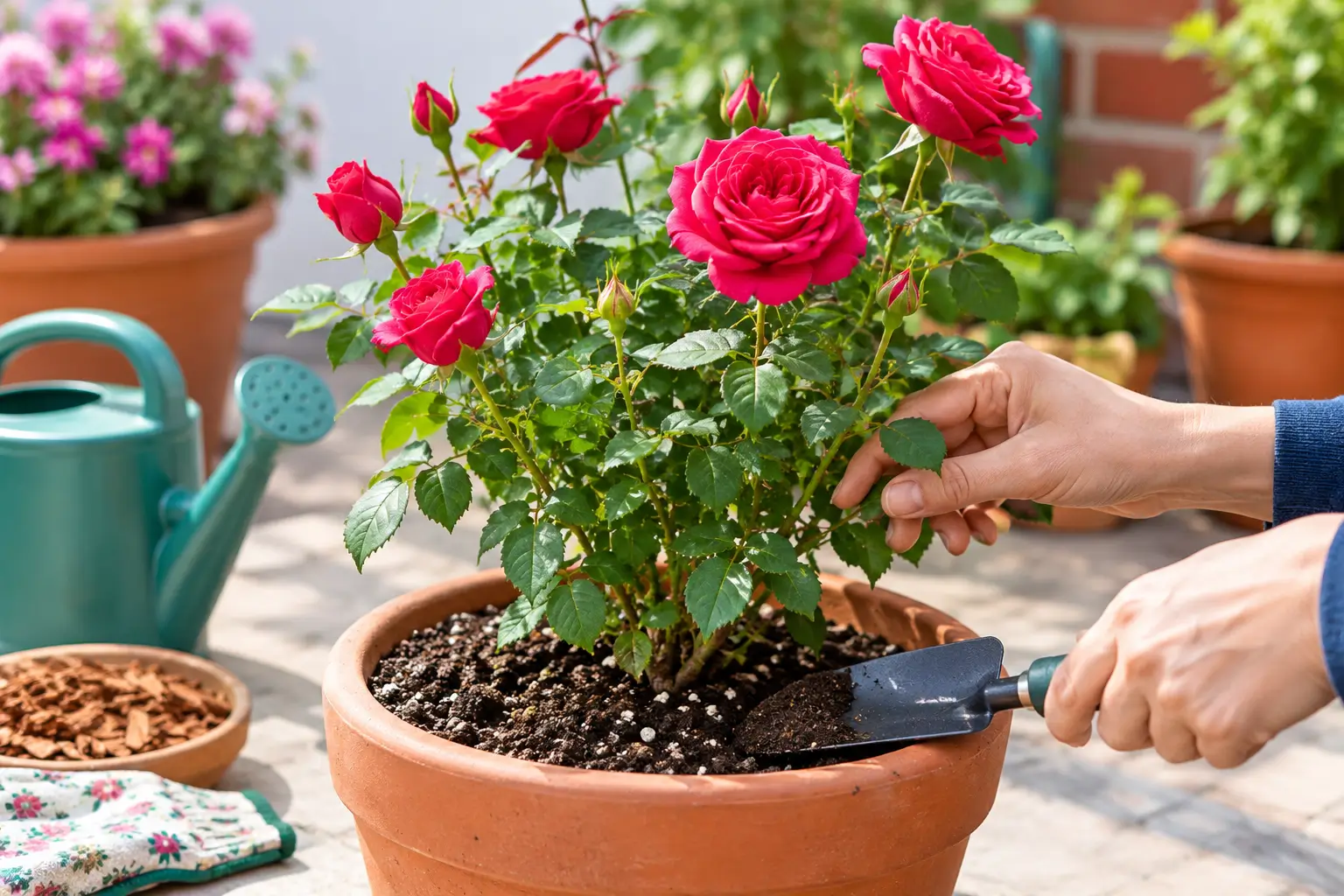
Container roses can need more frequent watering than roses planted directly in the ground. A pot has a limited amount of soil, and that soil can dry out quickly during hot weather. I am notes that container roses may need watering as often as daily during hot conditions, depending on circumstances. If you grow roses in pots:
- Check the soil more frequently.
- Make sure the container has proper drainage.
- Don’t allow the soil to stay completely dry for long periods.
- Don’t leave the roots sitting in permanently waterlogged soil.
- Pay attention to the plant during heatwaves.
Container gardening requires a little more attention, but it can still be a great way to grow roses when garden space is limited.
What Should You Do If Your Rose Starts Wilting in Summer?
Don’t panic in this situation. First, check the soil. If the soil is very dry, give the plant a thorough watering and monitor it. If the soil is already wet, adding more water may not solve the problem.
Then look at the leaves and stems. Are there black spots? Are the leaves covered in insects? Is the plant growing in a container? Has the weather suddenly become extremely hot?
Finding the cause is more useful than simply adding more water or fertilizer.
A Simple Summer Rose Care Routine
If you want to keep things simple, rose care tips in summer use this routine.
Once or twice a week
- Soil moisture
- Leaves
- New growth
- Flower buds
- Faded flowers
- Signs of pests
When the soil becomes dry
Water deeply around the base of the plant.
During very hot weather
Check container roses and newly planted roses more frequently.
When flowers fade
Deadhead repeat-flowering roses if appropriate for the variety.
Whenever you notice diseased or damaged growth
Remove it appropriately and dispose of affected material rather than leaving it around the plant. This kind of simple routine is much easier to maintain than trying to do ten different gardening jobs every day.
Common Mistakes in Summer Rose Care
Here are a few mistakes worth avoiding:
Overwatering: More water isn’t always better. Poorly drained, waterlogged soil can cause root problems.
Light daily watering: A shallow watering routine may not provide enough moisture deeper in the soil.
Watering the foliage unnecessarily: Watering at the base helps reduce unnecessary wetting of leaves and flowers.
Ignoring pests: A small aphid or mite problem can become much more noticeable if you don’t check the plant.
Too much fertilizer: Feeding should be based on the plant’s needs and the product instructions, not simply on the idea that more fertilizer means more flowers.
Letting weeds take over: Weeds compete with roses for water and nutrients.
Heavy pruning without knowing the rose type: Different roses have different pruning needs.
If you want to buy rose visit this store mayfieldflorist.
Final Thoughts
Good rose care tips in summer doesn’t have to be complicated. If I had to reduce it to a few basic habits, I’d focus on checking the soil, watering properly, keeping the soil mulched, watching the leaves, removing faded flowers when appropriate, and dealing with problems early.
Roses are surprisingly forgiving when their basic needs are met. You don’t need to stand beside the plant every day. A few minutes of observation can tell you a lot about what the plant needs. And that’s probably the best summer gardening habit of all: look at the plant before deciding what to do.
A healthy rose will usually give you clues. The soil tells you about watering, the leaves tell you about pests or disease, and the new growth tells you how the plant is responding to its growing conditions. With a little attention throughout summer, your roses can stay healthy and continue giving you beautiful flowers. With this 10 rose care tips in summer.