
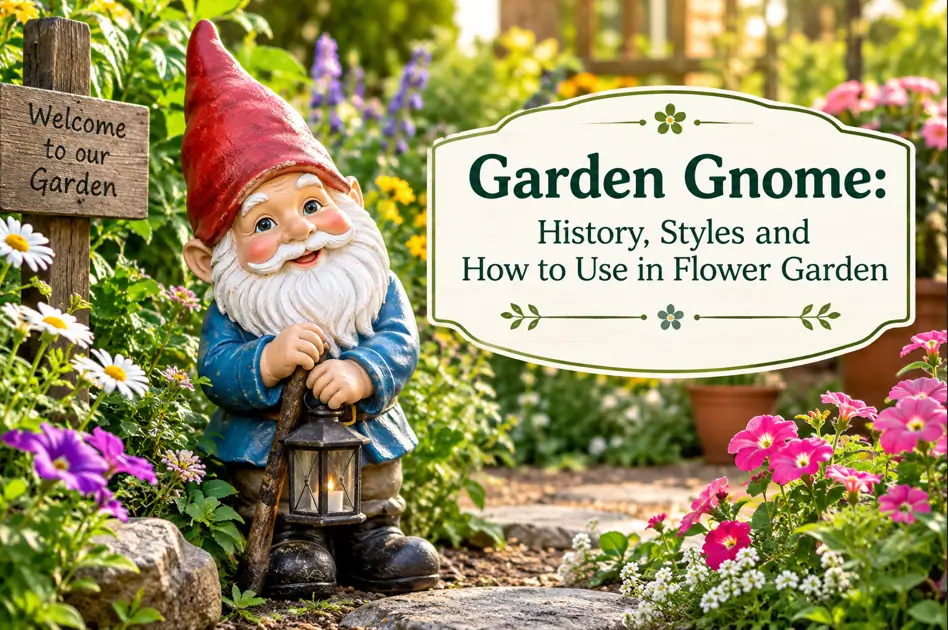
Garden Gnome: History, Styles and How to Use in Flower Garden
You have surely heard of the garden gnome; it is a charming, small sized statue. Most people find it very appealing, though some view it with a sense of surprise. If this statue is meticulously crafted using high quality materials and appropriate proportions, it looks even more attractive furthermore, placing it in the right spot amidst plants further enhances its beauty.
It is important to learn about garden gnomes, as this will give you an idea of how placing them alongside the flowers in your garden can enhance its beauty. I will tell you about the different types of garden gnomes and how to protect them from harsh sunlight, rain, and extreme cold.
What Is a Garden Gnome?
A garden gnome is placed in the garden to make it even more beautiful it is a statue of a short-statured dwarf. It generally looks like an old man with a pointed hat and a beard. Garden gnomes mostly range from 15 to 60 centimeters in height, but they are also available in larger sizes. They are mostly seen wearing a red hat and shoes blue and green colors are prominent in their attire. They often hold small objects in their hands, such as a watering can, a trowel, or a lantern; these small tools further enhance their beauty.
In ancient tales, gnomes are regarded as small spirits that dwell underground and guard treasures. For this reason, the ‘garden gnome’ placed in a garden is viewed as a small guardian that protects the garden’s plants.
A Short History of the Garden Gnome
These adorable garden figures known as “garden gnomes” actually originate from Germany. The story of these tiny clay figurines actually began in the Thuringia region of Germany during the 19th century. They quickly became famous across Europe and were widely admired. And then, these charming gnomes became a decorative feature of gardens in Britain during the Victorian era as well, and became widely popular.
Over time, these small figurines began to be made from chemical materials and cheap plastic instead of clay. This has made purchasing Gnomes even easier, allowing the average person to acquire them without difficulty. Craftsmen are now creating these gnomes primarily in simple styles and standard colors, making them suitable for adding a decorative touch and beauty even to small homes. If you want to find out about a company’s background, ensure you obtain accurate information, as you may receive conflicting details from different sources.
Why People Put Gnomes in Their Gardens
There are many reasons for placing a gnome statue in the garden that make it even more beautiful.
Most people use these cute gnomes in their gardens for amusement as if they are guarding the plants or peeking out from behind a plant like foxglove. Which look even more beautiful.
Typically, when flowers wither in the cold, many people use these charming gnomes to maintain the appeal of their gardens. Some place them in empty corners as decorative accents.
Types of Garden Gnomes
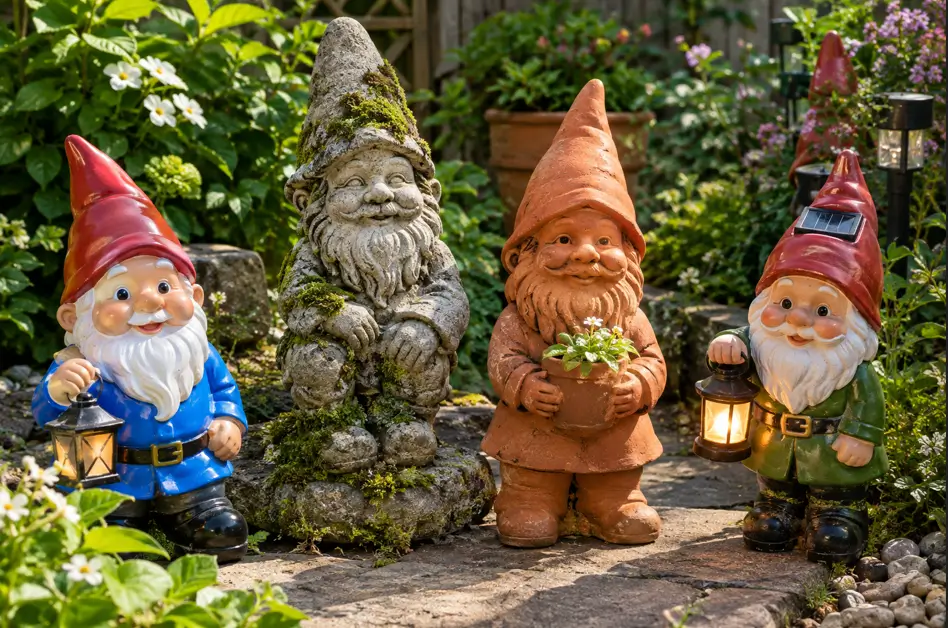
Gnomes made from chemical materials are very common and look quite beautiful. However, they are lighter than stone, and intense sunlight can ruin them.
Stone gnomes are quite heavy and sturdy. Over time, moss may grow on them, making them look even more charming.
Terracotta gnomes are also very beautiful and hold paint well, but they can break if water gets inside them.
Solar powered garden gnomes feature a small light often incorporated into a lantern or hat that adds a touch of evening charm to patios and pathways. However, the light they emit is generally soft rather than bright.
Best Flowers to Plant Around a Garden Gnome
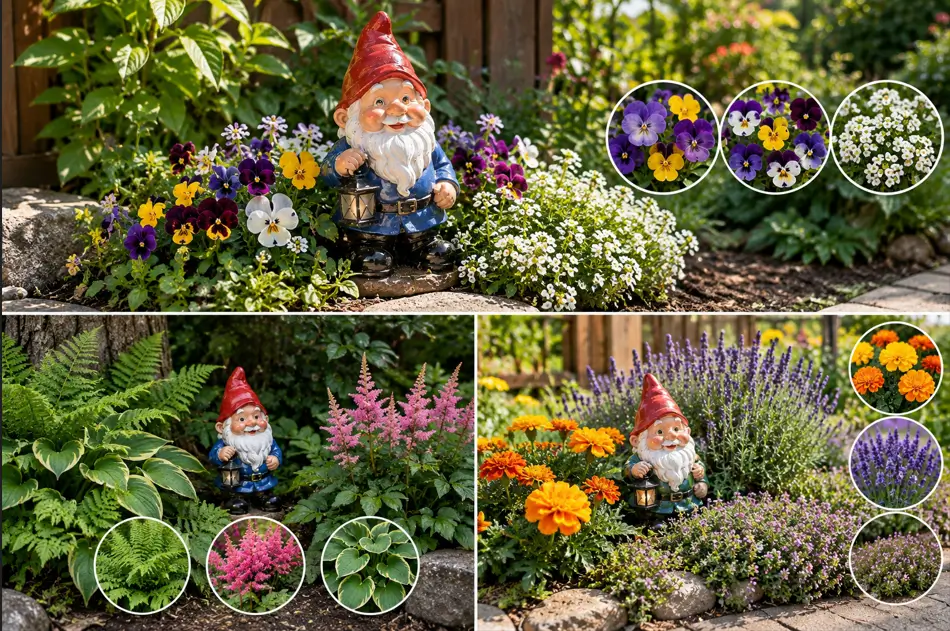
Since this statue is small in stature, small plants around it work best, as they allow the gnome’s beauty to stand out clearly.
For a small garden, you can choose flowers like violas, pansies, and sweet alyssum, which produce colorful blooms over an extended period.
In shady spots, alongside gnomes, you can plant flowers like ferns, astilbe and hostas that look quite attractive.
If you are looking for flowers to plant in a sunny spot, marigolds, lavender, and creeping thyme would be suitable choices, as they can withstand intense sunlight. Low growing plants pair better with statues. Since the statues themselves are relatively short, small plants surrounding them help highlight their beauty.
Caring for Your Garden Gnome
Wash the statue at least once or twice a year using lukewarm water, mild soap, and a soft brush. Do not use any chemicals, as they could damage the statue.
In cold regions, it is better to keep ceramic and chemical material gnomes under a shed or in a garage, as this will keep them safe.
Garden gnomes often gather moss, which people generally like. However, if you do not care for it, you can easily clean it off using a brush and water.
When watering the flowers, take care to ensure that splashes of soil do not land on the statue. Over time, these leave stains that are very difficult to clean and detract from the statue’s beauty.
Heavy stone statues are generally unlikely to topple after strong winds or storms. However, if the soil beneath them softens, there is a risk of them falling over. Therefore, ensure the gnome is installed properly and securely. Explore Asian garden styles.
Common Mistakes to Avoid
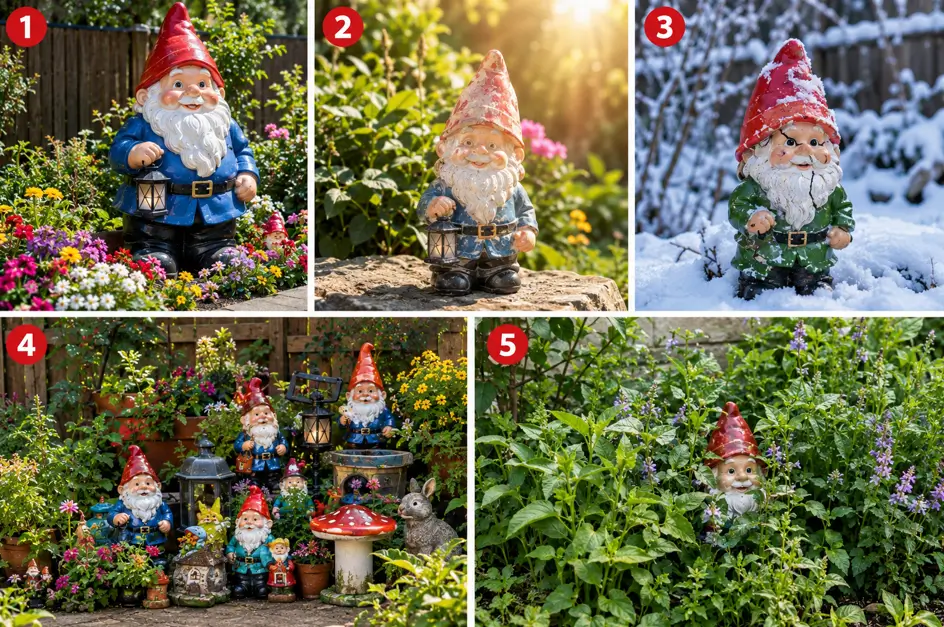
Some mistakes made in the garden that must be avoided.
1- Some people choose a large gnome for the flowerbed, which detracts from the beauty of the flowers.
2- Leaving the gnome in the sun without taking care of this can cause its color to fade.
3- Leaving a gnome made of cheap chemical materials outdoors in a severe cold, which could damage it.
4- Placing a large number of garden gnomes and other decorative items in one spot, making the garden look cluttered.
5- Planting them around the gnome without considering their size, causing them to grow and hide the gnome.
Frequently Asked Questions
What is the meaning of a garden gnome?
In culture, the garden gnome is regarded as a guardian spirit that watches over the garden. in common usage, it is a decorative item that is also sometimes used for amusement.
Where should I put a garden gnome in my garden?
Instead of placing the garden gnome in an open lawn, it is better to position it within a flowerbed; this will enhance its visual appeal. Additionally, plant low growing plants around it so that its beauty stands out clearly.
Can garden gnomes stay outside all year?
Gnomes made of concrete or stone are durable and sturdy, whereas those made of ceramic or standard synthetic materials can break in cold weather. Therefore, they should not be left outdoors during the cold.
Are garden gnomes out of fashion?
Garden styles keep changing, yet garden gnomes remain popular and well loved. Crafted from simple materials and featuring soft colors, these gnomes further enhance the charm of the garden.
Conclusion
A garden gnome is a lovely decorative item that can make your garden even more charming and beautiful. Choose a gnome that is sized to complement your plants, protect the statue from harsh cold, and ensure there is adequate space for plants to grow around it.
Place this beautiful dwarf statue alongside low growing plants in the right spot in your home garden. It will make your garden’s beauty even more captivating and lovely. If you buy the garden gnome visit this store.