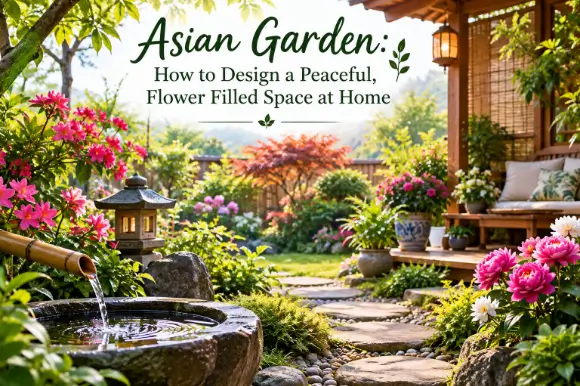
Asian Garden: How to Design a Peaceful, Flower Filled Space at Home
When I stood in the Asian Garden for the first time, I observed many things there closely and felt them. And there, there was neither an excess of plants nor any chaotic clash of colors. And alongside that, I saw a leaning maple tree on the stone path; in its shade, a few Iris flowers were in bloom, and the soft moss clinging to the edge of the rock was visible. A truly delightful and beautiful atmosphere, along with a sense of conscious beauty, could be felt there.
That is the beauty of garden décor; the aim is not to buy expensive lanterns or make it look like a temple. Its main purpose is to arrange the empty space with the help of plants, flowers and stones in such a way that the garden feels peaceful. Choosing the right flowers makes all the difference in maintaining this beauty.
Choosing the right flowers makes all the difference in maintaining this beauty. Which flowers to choose, how to arrange everything, and how to keep the garden fresh and vibrant throughout the different seasons. So, let’s find out all the details about the Asian Garden.
What Is an Asian Garden?
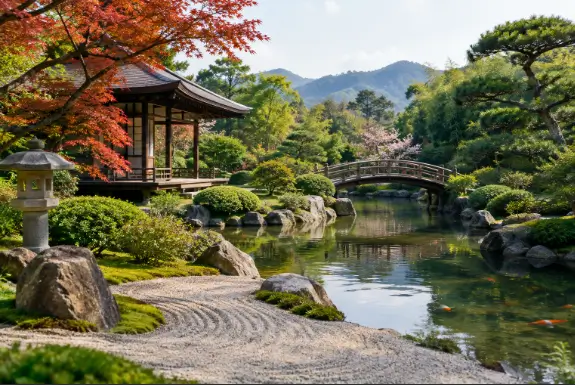
Asian garden landscaping and aesthetics is a style influenced by the traditions of countries such as China, Japan, and Korea. As we know, every culture has its own distinct style, yet there are certain shared concepts found within them. Such as harmony with nature, sophistication and moderation, and attachment to seasonal changes.
Creating a garden does not mean filling every space with colorful flowers without regard for any arrangement. Placing every stone, shrub, and flower in its perfect spot creates a beautiful garden. Come, let me tell you about some garden styles.
The Main Asian Garden Styles
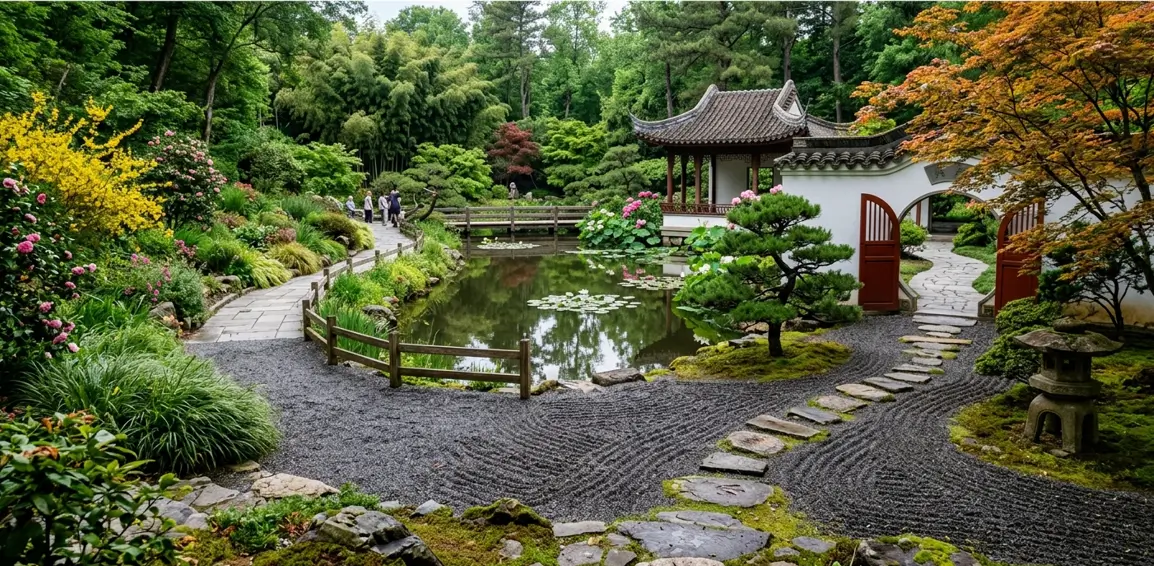
Understanding the differences helps you choose a direction for your own space.
Japanese garden: It looks very simple and natural. It incorporates many elements that give it a natural feel, such as trimmed cedar trees, stepping stones, gravel, and carefully placed features. In this, spring azaleas or autumn chrysanthemums are used with great poetic economy.
Chinese garden: Chinese gardens are generally very beautiful and unique in style, often featuring scenic water features, round doorways, winding paths, and designated seating areas. Among them, flowers of particular significance include the peony, which symbolizes prosperity; the lotus, representing purity; and the plum blossom, regarded as a symbol of resilience.
Korean garden: Korean gardens are generally peaceful, natural, and simple. To develop these gardens, the original form of the terrain is preserved rather than altering its structure. Forsythia and wildflowers are generally preferred to create a calm, natural, and simple look.
Mentioning these to you does not mean you must choose one of them you could pick any one but this is my recommendation. Combine these three to create a beautiful garden, provided it looks beautiful and natural.
Core Principles Behind Asian Garden Design
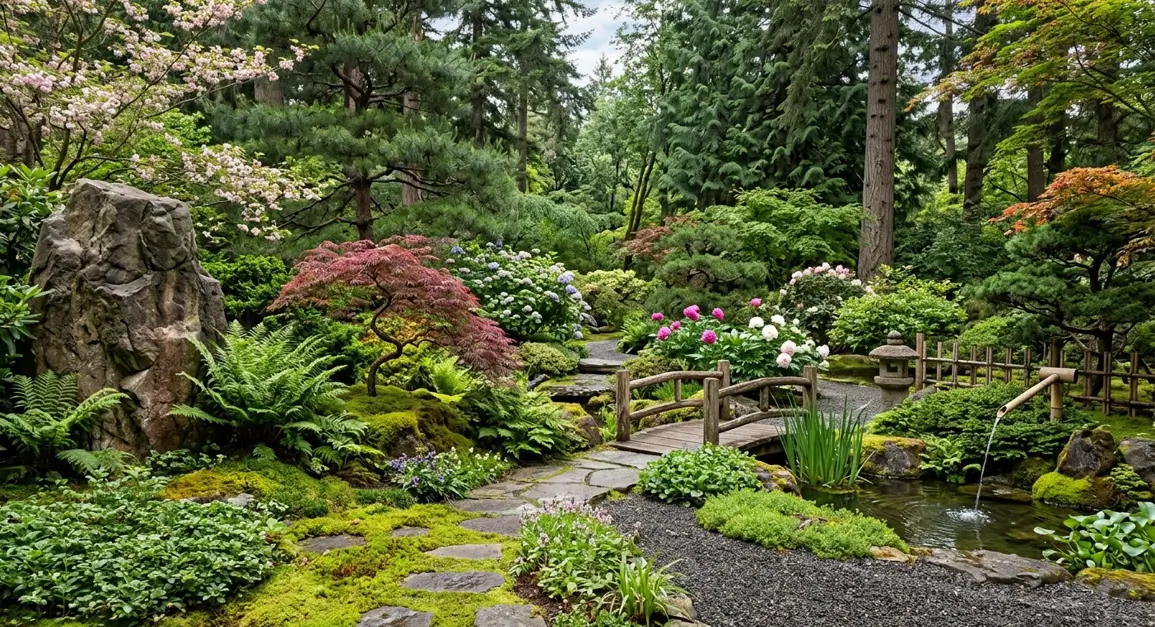
It is important to keep a few principles in mind before purchasing any plant; hopefully, these guidelines will serve you well.
Balance Without Symmetry
In Western gardens, identical plants are placed on both sides, but this is not the case in Asian gardens. In Asian gardens, plants, flowers, and rocks are arranged in such a way that, despite their differences, they create a balanced and beautiful environment.
Seasonal Interest
If genuine effort is put into a good Asian garden, it retains its beauty throughout every season. Just as flowers in spring, greenery in summer, colorful leaves in autumn, and evergreen plants in winter make a garden beautiful and delightful.Therefore, my advice is that whenever you select plants, you should keep the seasons of the entire year in mind.
Layers and Depth
If you truly want to make the garden beautiful, divide it into three sections. Place shrubs and tall trees at the back, position medium sized plants neither too large nor too small in the middle, and place small plants or moss at the front. In this way, you can create a highly attractive garden even in a small space; it adds greater depth and beauty.
Using Nature’s Materials
They give the garden a natural and beautiful appearance by using stone, gravel, bamboo, wood, and water. Using flowers alongside these elements creates a sense of tranquility and an enchanting atmosphere.
Best Flowers for an Asian Garden
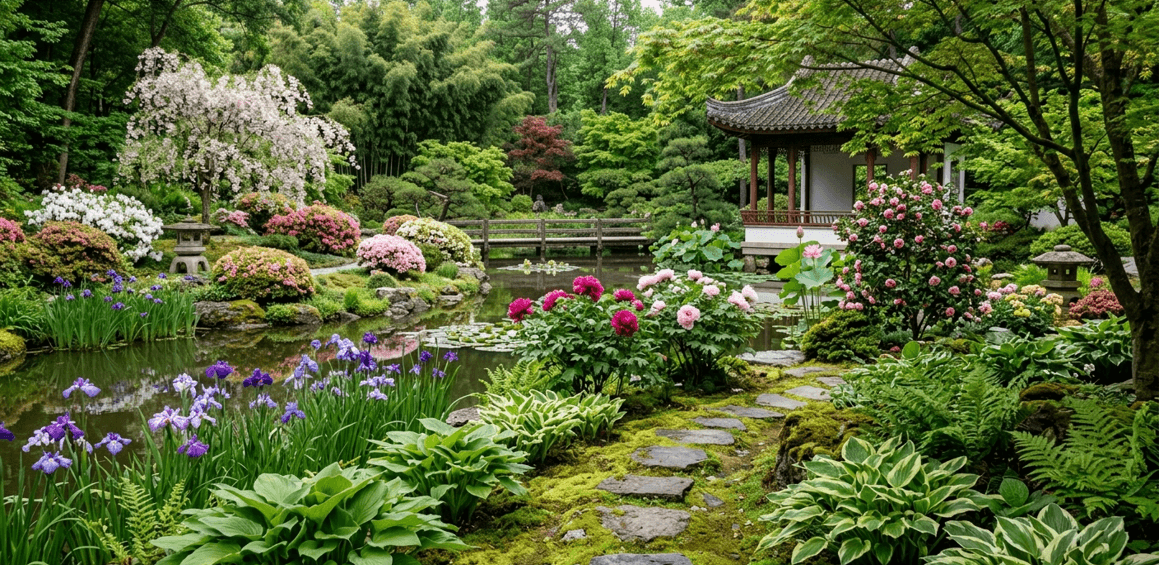
Now, let us talk about the flowers that are traditionally favored and are both beautiful and famous. Many of these flowers are very easy to grow; this is evident from actual experience and observation. Let’s look at the names of these flowers now.
1- Cherry Blossoms and Flowering Trees
2- Peonies
3- Azaleas and Rhododendrons
4- Japanese Iris
5- Camellias
6- Chrysanthemums
7- Lotus and Water Lilies
8- Hydrangeas
9- Bleeding Heart and Hosta
Apart from these flowers, there are many others that are very easy to grow and enhance beauty.
Quick Flower Selection Guide
How to Plan Your Asian Garden Layout
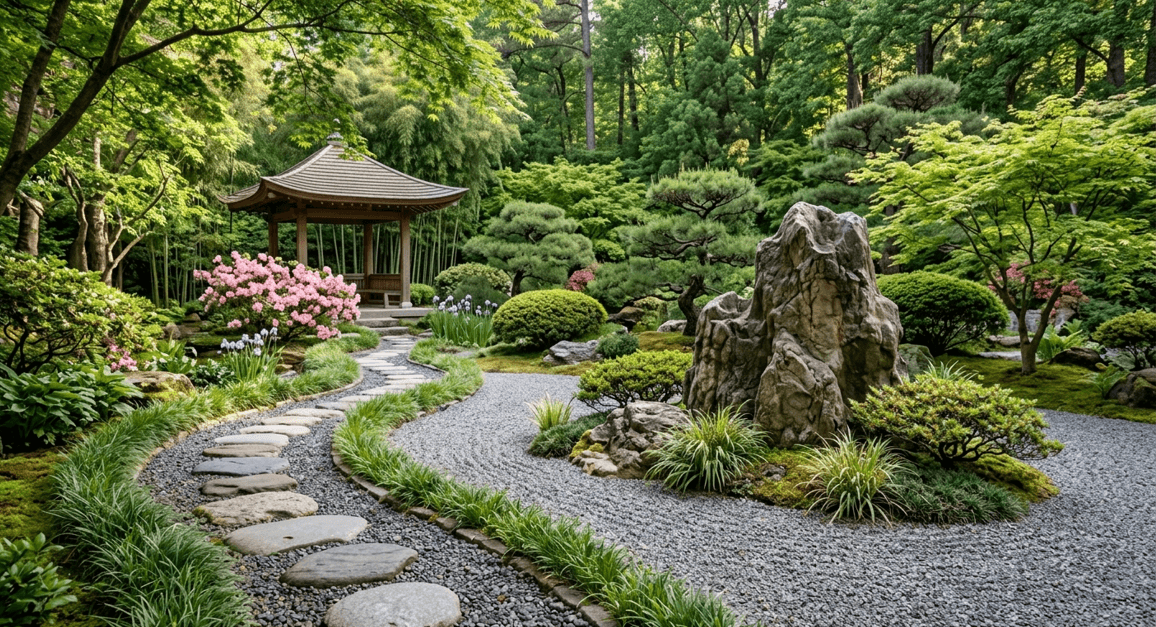
Let me tell you the method by which you can avoid mental stress and unnecessary expenditure.
Step 1: Observe Your Space
First, inspect the site for your Asian garden to determine where the sunlight is strongest, the extent of the shade, and where rainwater tends to pool; then, plan the layout of your garden accordingly. And then, select flowers and plants that are suitable.
Step 2: Choose a Focal Point
Incorporate a unique feature into the garden such as stones, plants, or a water fountain to draw everyone’s attention. for instance, place large, mountain like rocks with grass growing along their sides to enhance their beauty.
Step 3: Create a Path
Create a gently curving path in the garden using gravel or tiles. This will further enhance the garden’s beauty.
Step 4: Add Structure Before Flowers
When preparing the garden, plant the stones, plants, and evergreen shrubs first. After that, plant the flowers so that the empty spaces look beautiful and the flowers can be arranged properly.
Step 5: Leave Room to Breathe
It is not necessary to fill the entire garden with plants in some cases, open spaces featuring stones and gravel also enhance its beauty. Because open space makes the garden balanced, peaceful, and beautiful.
Common Mistakes to Avoid
Many people commonly make these mistakes when creating an Asian garden; you should avoid them.
Planting a large number of plants; filling an empty space with plants. Empty spaces also add to the beauty.
Over decorating for instance, by using an excessive number of artificial items or other decorative objects.
Neglecting soil, sunlight, and shade, and failing to provide them according to their needs.
To maintain the beauty of the garden, keep pruning and cleaning it.
Garden maintenance specifically cleaning and pruning should not be overlooked to keep the garden in good condition, these tasks must be performed in a timely manner.
If you want to see how to care for rose flowers, visit this blog. Rose care tips.
Frequently Asked Questions
What flowers are best for an Asian garden?
Cherry blossom, peony, azalea, japanese iris, camellia, chrysanthemums, and lotus are excellent choices for an Asian garden. Along with this, choose flowers for your space based on the sunlight and shade.
What makes a garden look Asian?
The defining characteristics of an Asian garden are its natural elements, such as stones, plants, evergreen shrubs, and a selection of exquisite flowers.
How much does an Asian garden cost?
The cost of creating an Asian style garden depends on your design. You can create your Asian garden on a low budget using materials like stones, gravel, and plants and continue adding more elements over time.
What is the difference between a Japanese and a Chinese garden?
Japanese gardens are generally tranquil and simple, whereas Chinese gardens are more ornate and layered.
Final Thoughts
You can easily create an Asian-style garden; there is no need for complicated rules. Simply understand your space and start with a few of your favorite plants.
If space for an Asian garden is limited, it is not a problem; a single camellia plant, a beautiful stone, and a winding path can also make the garden serene and beautiful.
Similarly, over time, you will discover which plants thrive in your garden. gradually, it will become a beautiful reflection of your hard work and personal taste.If you are ready to create an Asian garden, you can purchase items here. https://www.verzaalsflorist.com/